
Victoria Embankment, Nottingham — Saturday 16 August 2026
Official: https://nottinghamcarnival.co.uk
Origins in Migration and Memory
Nottingham Carnival begins in the quiet, unrecorded spaces of post-war Britain rather than in official archives. In the late 1950s, Caribbean families arriving in Nottingham under the Windrush-era migration wave began to build social and cultural life in neighbourhoods such as the Meadows. In these early years, Carnival did not yet exist as an institution, but its elements were already forming.
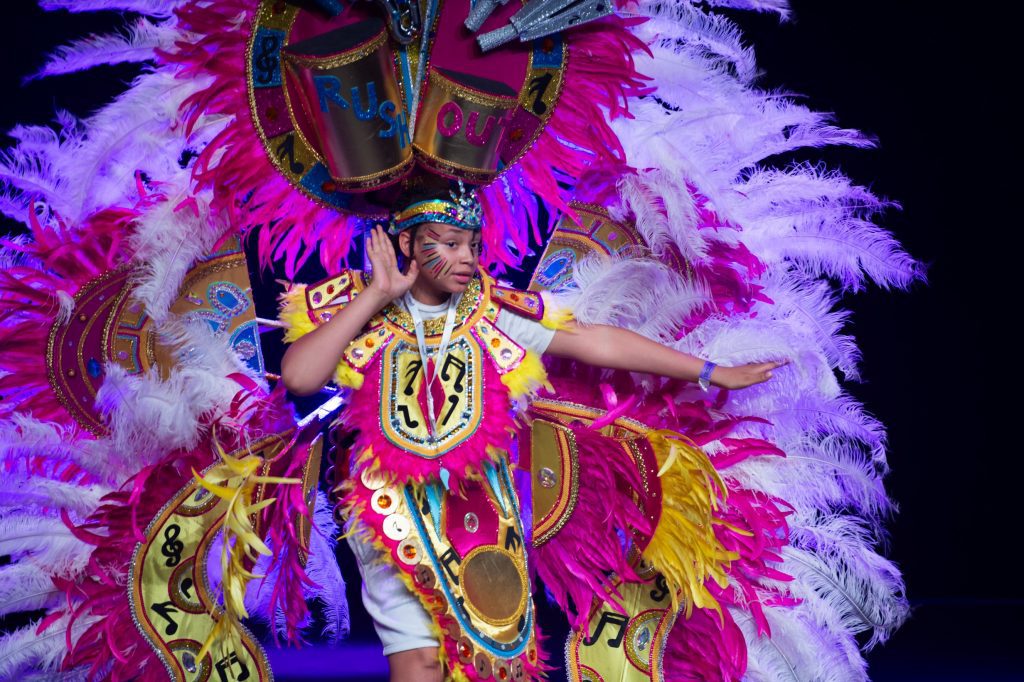
Community gatherings, street processions, church hall dances and informal steelband performances became the first expressions of a cultural continuity that migrants carried with them from the Caribbean. These were shaped particularly by traditions from Trinidad and Tobago, where Carnival functions not simply as entertainment but as a layered cultural language combining masquerade, music, and public performance.
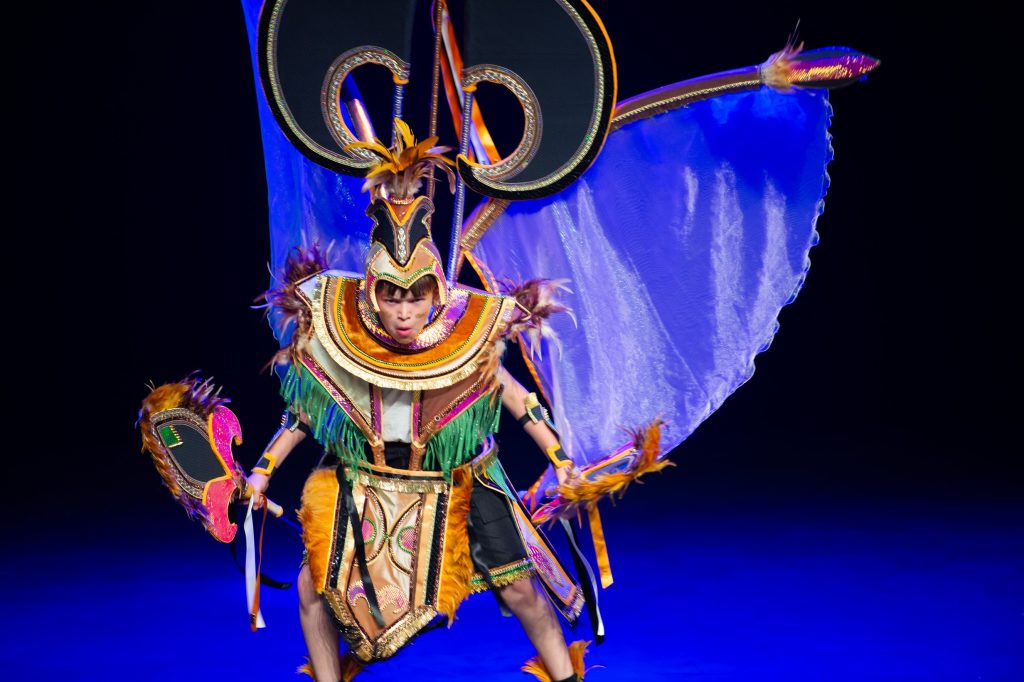
In Nottingham, those traditions were not transplanted intact. They were adapted. Materials were limited, public space was contested, and Caribbean communities were still negotiating their place within a changing British urban landscape. Yet even in improvised form, the essential structure of Carnival emerged: collective participation, rhythmic expression, and the transformation of ordinary streets into temporary cultural spaces.
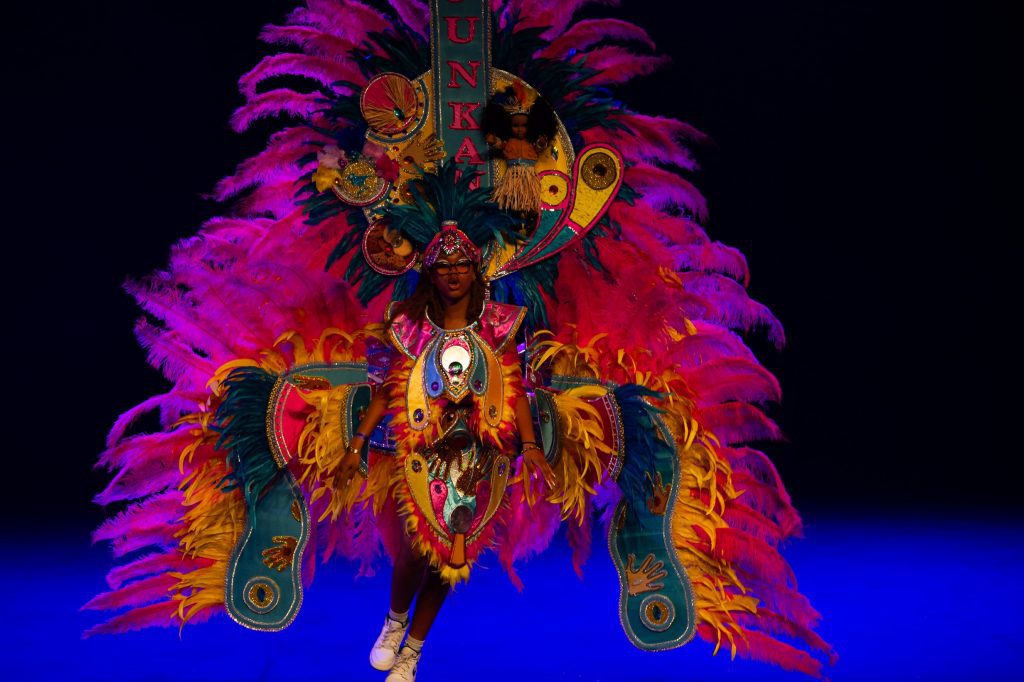
By the early 1960s, the Meadows had become a focal point for these gatherings. What mattered was not scale, but presence. Carnival functioned as a way of asserting cultural visibility in a city where Caribbean identity was still marginal in public life.
From Community Celebration to City Event
Through the 1970s and 1980s, these informal celebrations began to consolidate into a more recognisable civic event. Community organisations, arts practitioners and emerging cultural leaders started working to formalise what had previously existed as dispersed activity.
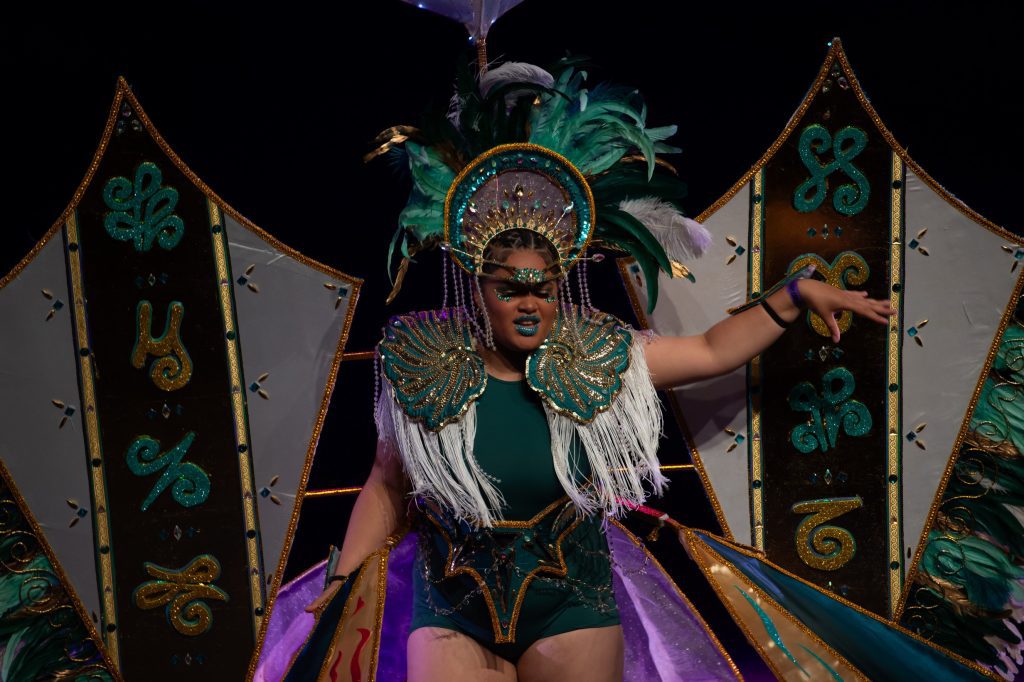
This period marks the transformation of Nottingham Carnival from neighbourhood expression into city-wide festival. Victoria Embankment became the central stage for this shift. Its open riverside landscape provided the physical scale needed for parades, sound systems and large public gatherings, and over time it became inseparable from the identity of the Carnival itself.
As the event expanded, so too did its cultural architecture. Costume bands grew in ambition and design complexity, drawing on both Caribbean masquerade traditions and emerging British carnival aesthetics. Steelpan orchestras became more structured and visible, anchoring the musical identity of the event in Trinidadian tradition while adapting to UK performance contexts. At the same time, sound system culture introduced a new sonic dimension, with reggae, soca and later dancehall shaping the auditory landscape of the Carnival.
By the late 1980s and early 1990s, Nottingham Carnival had become one of the most prominent Caribbean cultural events outside London. It was no longer simply a community gathering; it was a regional cultural fixture embedded in the city’s annual calendar.
Crisis, Cancellation and Community Rebuilding
The late 1990s marked one of the most difficult periods in the Carnival’s history. In 1998, Nottingham City Council withdrew its support for the event amid concerns around funding, safety and logistical management. The decision effectively ended Carnival in its established civic form.
The cancellation had a profound impact on the community. For many, it represented more than the loss of an annual event; it was the disruption of a cultural infrastructure that had taken decades to build. Public response included protests and community mobilisation, reflecting the extent to which Carnival had become embedded in Nottingham’s cultural identity.
What followed, however, was not disappearance but restructuring. Responsibility for the Carnival shifted away from direct municipal control and into the hands of community organisations, most notably Tuntum Housing Association and associated cultural partners. This transition fundamentally changed the governance model of the event.
Rather than relying on a single institutional structure, Carnival became a distributed cultural system supported by partnerships, arts funding, volunteer networks and local organisers. This model proved more resilient than its predecessor, allowing the event to return in a more stable and sustainable form in the early 2000s.
Carnival Today: Identity, Sound and Continuity
In its contemporary form, Nottingham Carnival is a layered cultural event that brings together performance, music, food and community participation in a single public space. Held at Victoria Embankment, it now operates as both a cultural festival and a civic gathering point for the city’s Caribbean and wider multicultural communities.
The parade remains the central organising structure. Costume bands present elaborate visual narratives that draw on Caribbean mythology, African diasporic symbolism and contemporary social themes. These performances are not simply aesthetic displays but narrative constructions expressed through movement, colour and design.
Sound system culture continues to play a defining role in shaping the Carnival’s atmosphere. Multiple stages operate across the site, each with its own musical identity, ranging from traditional reggae and dub to contemporary Afro-Caribbean fusion genres. This sonic diversity reflects the evolving nature of Caribbean identity in the UK, where tradition and innovation coexist rather than compete.
Steelpan orchestras remain one of the most culturally significant elements of the event. Their presence maintains a direct link to Trinidad and Tobago, anchoring the Carnival in its historical origins while also adapting to new performance contexts within Britain.
Food culture forms another essential layer of the Carnival experience. Caribbean cuisine is not treated as a secondary attraction but as a core cultural expression. Food stalls offering dishes such as jerk chicken, curried goat, patties and plantain reflect both heritage and adaptation, serving as an accessible entry point into Caribbean cultural traditions for wider audiences.
A Living Civic Tradition
Today, Nottingham Carnival functions as more than a festival. It operates as a civic institution that contributes to the city’s cultural identity, youth development pathways and creative economy. For younger participants, it offers opportunities to engage in costume design, music production, dance and event organisation, creating routes into creative industries that extend beyond the Carnival itself.
Its significance also lies in visibility. In a city shaped by migration, industrial change and demographic diversity, Carnival provides a moment in which Caribbean cultural identity is not peripheral but central. It redefines public space temporarily, transforming a riverside park into a site of cultural expression and collective memory.
The 2026 edition continues this long trajectory. On 16 August, Victoria Embankment once again becomes the stage for a tradition that has evolved over nearly seven decades. What began as small gatherings in the Meadows has become one of Nottingham’s most important cultural events, shaped by migration, adaptation and community resilience.
Nottingham Carnival endures not because it remains the same, but because it continues to change while retaining its core purpose: the public expression of Caribbean cultural life within the city.
