
African Caribbean Centre, Maidstone Road — Saturday 1 August 2026
Official: https://leicestercarnival.com
Origins in Community Formation and Cultural Assertion
Leicester Caribbean Carnival emerges from one of the most socially dynamic Caribbean communities in the Midlands, taking shape during the mid-1980s as African-Caribbean residents sought a formal cultural platform within a rapidly diversifying city. Unlike older civic carnivals that evolved from long historical street traditions, Leicester’s Caribbean Carnival has its origins in organised community action, rooted in cultural preservation, youth engagement and visibility.

By this period, Leicester was already experiencing significant demographic change, with Caribbean, South Asian and African communities contributing to a redefinition of the city’s cultural identity. Within this environment, Carnival became a structured response to a shared need: the creation of a public space where Caribbean heritage could be expressed on its own terms.
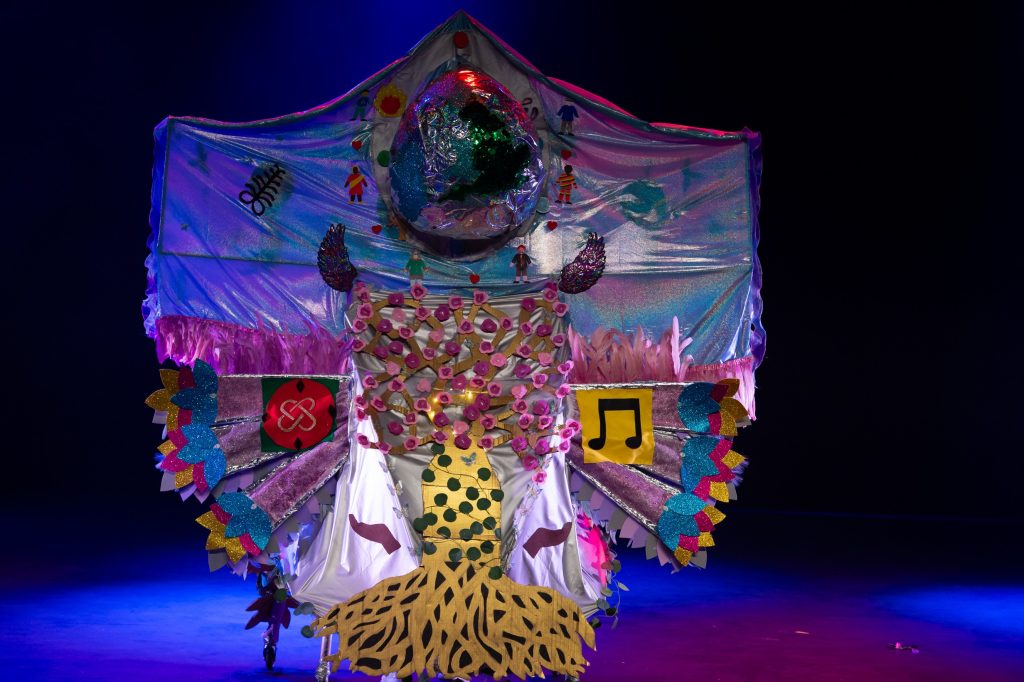
The African Caribbean Centre on Maidstone Road became central to this development. More than a venue, it functioned as an institutional anchor for cultural life in the city. Meetings, rehearsals, costume preparation and community organising all converged within its walls, giving the Carnival a stable organisational foundation that many newer festivals lacked.
From the beginning, Leicester Caribbean Carnival was shaped less by spontaneous street tradition and more by structured cultural planning. This distinction gives it a different texture from other Midlands carnivals: it is deliberate, institutionally supported, and deeply embedded in community governance.
Growth, Visibility and the Making of a City Carnival
As the Carnival developed through the late 1980s and 1990s, it expanded from a community-led initiative into a recognised city event. This transition was not sudden but gradual, shaped by increasing collaboration between community organisations, local authorities and cultural practitioners.
During this period, Carnival programming began to diversify. Costume bands became more organised, often working around annual themes that drew on Caribbean history, African heritage and contemporary social issues. These themes were not decorative; they provided a narrative framework through which communities could explore identity, memory and belonging in a British urban context.
Music played a central role in this expansion. Steelpan orchestras became a defining feature of the Carnival’s soundscape, preserving a direct connection to Trinidadian musical traditions while also adapting to the evolving tastes of younger generations. Alongside steelpan, reggae, soca and later Afro-Caribbean genres became central to the Carnival experience, reflecting the hybrid musical identity of modern Leicester.
As participation increased, the Carnival also became a platform for youth development. Schools, youth organisations and community groups began to integrate Carnival-related activities into their programming, including dance workshops, costume design projects and performance training. This helped establish Carnival not only as an annual event but as an ongoing cultural process embedded in the city’s social fabric.
The African Caribbean Centre and Institutional Identity
Unlike many UK carnivals that operate primarily through temporary organisational structures, Leicester Caribbean Carnival is anchored by the African Caribbean Centre, which functions as both cultural institution and logistical base.
This institutional grounding has had a significant impact on the Carnival’s stability and continuity. It has allowed for year-round planning cycles rather than purely seasonal organisation, enabling sustained engagement with participants and more structured development of costume bands and performance groups.
The Centre also plays a symbolic role. It represents continuity for a community that has had to navigate both migration and adaptation within British urban life. In this sense, the Carnival is not simply an event hosted by the Centre; it is an extension of the Centre’s broader cultural mission.
This structure has given Leicester Caribbean Carnival a distinct identity within the UK carnival landscape. It is less reliant on temporary funding cycles and more embedded in local cultural governance, which has helped maintain consistency in its programming and participation levels over time.
Contemporary Carnival Culture and Artistic Expression
In its contemporary form, Leicester Caribbean Carnival operates as a multi-layered cultural event that combines parade traditions, performance arts and community celebration. While its structure remains rooted in Caribbean Carnival traditions, its expression reflects the evolving identity of Leicester as one of the UK’s most diverse cities.
Costume bands remain central to the Carnival experience. These groups invest significant time in developing visual narratives that are expressed through elaborate costume design, choreography and thematic storytelling. The themes often reflect a combination of Caribbean cultural memory, African diasporic heritage and contemporary social narratives relevant to local communities.
Music continues to function as a structural backbone of the event. Steelpan remains the most historically grounded musical form present at the Carnival, while sound system culture introduces a broader sonic spectrum that includes reggae, soca, dancehall and Afrobeat influences. This musical diversity reflects the generational evolution of Carnival participation, where younger audiences and performers bring new stylistic influences into established traditions.
Food culture is equally significant. Caribbean cuisine operates not only as a commercial aspect of the Carnival but as a form of cultural continuity. Food stalls provide a sensory link to Caribbean heritage, with dishes such as jerk chicken, rice and peas, curried goat and fried plantain forming an essential part of the Carnival environment.
Carnival as Civic Identity in Leicester
Leicester Caribbean Carnival plays an important role in shaping the city’s civic identity. Leicester is widely recognised as one of the most diverse cities in the United Kingdom, and Carnival provides a public expression of that diversity in a celebratory rather than abstract form.
Unlike policy discussions of multiculturalism, Carnival operates through lived experience. It brings together residents across generational, cultural and socioeconomic lines in a shared public space. In doing so, it transforms cultural difference into collective participation.
For many residents, the Carnival represents an annual moment of visibility. It allows Caribbean identity to be expressed not as a subcultural presence but as a central feature of the city’s cultural landscape. At the same time, it provides opportunities for cross-cultural engagement, drawing audiences from across Leicester’s diverse communities.
Leicester Caribbean Carnival 2026
The 2026 edition of Leicester Caribbean Carnival continues this established tradition, taking place on 1 August at the African Caribbean Centre on Maidstone Road. While each year introduces new themes and performances, the underlying structure remains consistent: a community-led celebration rooted in cultural expression, artistic performance and intergenerational participation.
The Carnival’s continued operation reflects both its institutional strength and its cultural relevance. It remains a key moment in Leicester’s summer calendar, offering a space where heritage, creativity and community converge.
Closing Perspective
Leicester Caribbean Carnival stands as an example of how Caribbean cultural traditions have been restructured within British urban contexts without losing their core identity. Its strength lies not in scale alone, but in organisation, continuity and institutional grounding.
Where some carnivals evolved primarily through street tradition, Leicester’s development reflects a different trajectory: one shaped by community organisation, cultural infrastructure and sustained civic partnership. The result is a Carnival that is both deeply rooted and structurally resilient, capable of adapting while maintaining continuity.
It is this balance that has allowed Leicester Caribbean Carnival to remain a defining cultural event in the Midlands, and a vital expression of Caribbean heritage within contemporary Britain.
